Flea Markets Near Me · July 10, 2026
How to Sell at a Flea Market: A First-Timer's Guide
Everyone who has cleared out a garage has considered it. A booth for a day, a table of things you no longer want, and cash at the end of it. The economics are real but thinner than people expect, and almost everything that determines whether the day works is decided before you arrive.
Booth costs and what you're actually buying
Markets charge for a space, usually per day, and the price varies enormously with the market's size, location, and whether the space is indoor or outdoor. Call ahead or check the market's website: rates, reservation requirements, and setup times are the things a market publishes most reliably, and they differ far too much from place to place for any figure in an article to be worth trusting.
What you're buying is footfall, and footfall varies by an order of magnitude between a small-town market and a regional one. It's worth attending a market as a buyer before you ever pay for a booth there. Walk the aisles at 8am and again at 2pm, and notice which booths have people standing at them.
What sells, and what doesn't
Things people can use immediately sell. Tools, kitchenware, children's clothing and toys, sporting goods, garden equipment, and anything a household needs and doesn't want to pay retail for. These move steadily all day at modest prices.
Things people collect sell, but to a much smaller pool of buyers who arrive early and know exactly what they're looking at. Records, glassware, tools with a brand name, vintage clothing, and anything genuinely old.
What consistently doesn't sell: adult clothing that isn't vintage, mass-market books, electronics of uncertain function, exercise equipment, and anything large that a buyer would need to arrange transport for. Bring these only if you'd be happy to donate them at the end of the day, because that is where they are going.
Price it, and price it visibly
Unpriced goods do not sell. A shopper who has to ask the price of something has to start a conversation with a stranger, risk feeling foolish, and commit to a negotiation before they know whether they're interested. Most people simply put the item down and walk on.
Price everything, price it above what you'll accept, and expect to be negotiated down. That isn't a game you're playing on the buyer; it's the format both sides have agreed to. A seller who won't move at all frustrates buyers and sells less than a seller who prices 25% high and comes down cheerfully.
Display beats inventory
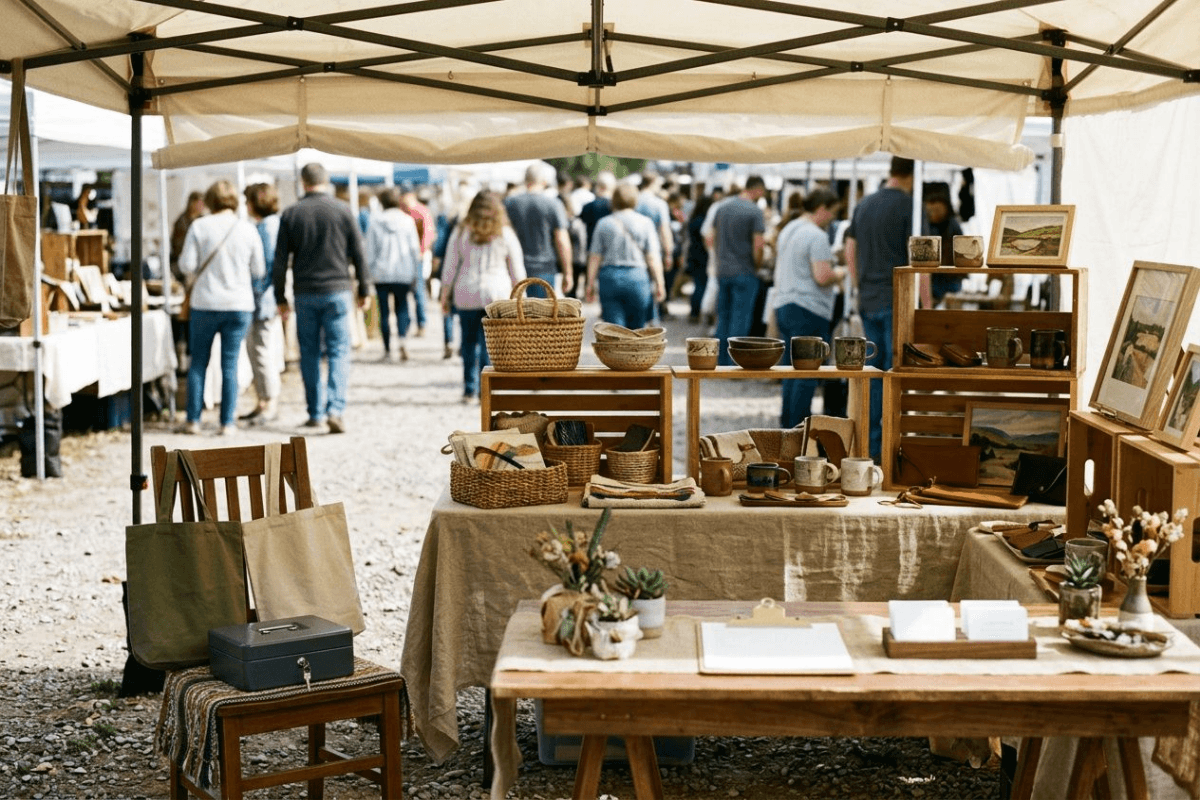
A table at waist height with items spaced out and facing the aisle will outsell a table twice as full. Boxes on the ground are where sales go to die: nobody wants to bend, kneel, and rummage in front of a queue. Get things off the floor, get them at eye level, and leave space between them so that each object reads as a thing rather than as part of a pile.
One well-chosen item at the front of the booth, priced attractively, does the work of a shop window. It stops people, and people who stop, buy.
The practical list
- Change. Far more small bills than you think. A vendor who can't break a twenty at 7am loses the sale.
- A card reader. Cash still dominates, but a card option converts the buyer who's out of it.
- Bags and newspaper. Someone buying four glasses needs a way to carry them.
- Shade, water, and a chair. It's an eight-hour day standing on asphalt.
- A second person. Not for sales. For the bathroom, for lunch, and for the fact that an unattended booth is an invitation.
- A donation plan. Decide before you go where the unsold goods are going, so the drive home isn't a decision.
The unwritten courtesies
Don't undercut your neighbor loudly. Don't play music. Don't pack up early on a slow afternoon: markets that let vendors leave at 2pm end up as ghost towns by 2:30, and the markets that thrive are the ones where the vendors hold the line. Watch your neighbor's booth while they take a break, and they'll watch yours.