Flea Markets Near Me · July 10, 2026
Indoor Flea Markets: Where to Shop When the Weather Turns
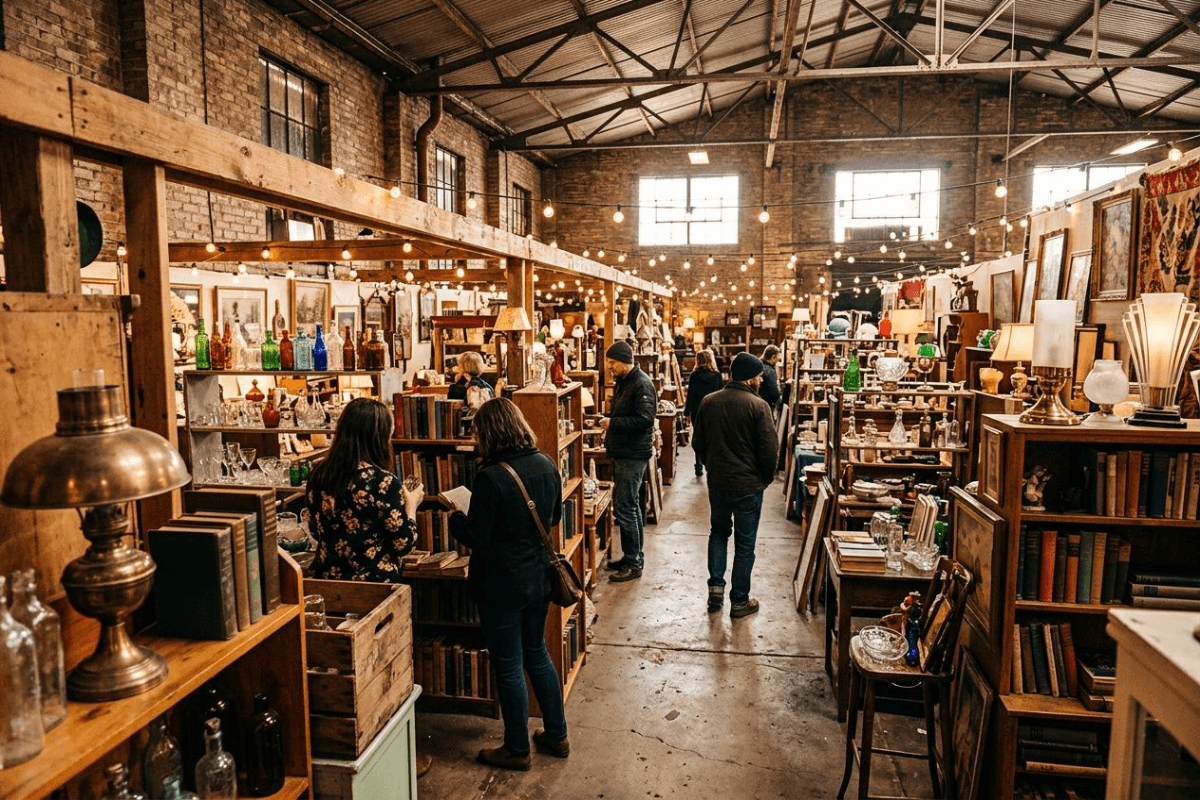
The classic image of a flea market is a field full of tables on a Sunday morning. But a large share of American markets operate indoors, in converted warehouses, old department stores, fairground exhibition halls, and purpose-built market buildings. They run through January, they run in the rain, and the goods on offer are often meaningfully different.
We tag markets as indoor when the source data or the visitor reviews confirm it. Here's what that shows across the country.
Of the 1,118 flea markets in our directory, 407 (36%) are confirmed to have every feature on this list, across 50 states.
Which states have the most
| State | Count | Share of all flea markets on this list |
|---|---|---|
| Texas | 26 | 6% |
| Arkansas | 21 | 5% |
| California | 20 | 5% |
| Indiana | 16 | 4% |
| Kansas | 13 | 3% |
| Kentucky | 13 | 3% |
| Montana | 13 | 3% |
| Colorado | 12 | 3% |
| Connecticut | 11 | 3% |
| Mississippi | 11 | 3% |
| Oklahoma | 11 | 3% |
| Oregon | 11 | 3% |
The best-reviewed of them
Sorted by visitor rating, limited to flea markets with at least 25 reviews so a single five-star rating can't top the list.
- The Little Light Collective
Columbus, Ohio · ★ 5.0 (69 reviews)
- The Brighton Emporium
Boston, Massachusetts · ★ 4.9 (178 reviews)
- Main Street Vintage Market
Millbrook, Alabama · ★ 4.9 (76 reviews)
- WEHA Vintage & More Marketplace
West Hartford, Connecticut · ★ 4.9 (55 reviews)
- Heirlooms Antique Mall
Aurora, Colorado · ★ 4.8 (745 reviews)
- Hwy 102 Flea Market and Antique Mall
Rogers, Arkansas · ★ 4.8 (724 reviews)
- 3 Strands Vintage Antique Mall
Oklahoma City, Oklahoma · ★ 4.8 (511 reviews)
- The Big Flea Market
Manassas, Virginia · ★ 4.8 (425 reviews)
- Yesteryears Antique Mall
Billings, Montana · ★ 4.8 (363 reviews)
- The Ark Antiques and Flea Market
McPherson, Kansas · ★ 4.8 (347 reviews)
- Marketplace 3301
Billings, Montana · ★ 4.8 (289 reviews)
- Zèle NOLA
New Orleans, Louisiana · ★ 4.8 (263 reviews)
How this list was built: we counted confirmed features across every listing in our directory. A feature is only counted when it is stated in the source data or in visitor reviews. Where we have no confirmation, the listing is left out of the count rather than assumed – so the real numbers are likely higher than the ones shown here. Ratings and review counts come from Google. Figures update whenever the directory is rebuilt.
Indoor markets sell different things
Weather shapes inventory. An outdoor vendor packs everything into a van at the end of the day, which favors goods that are light, robust, and cheap enough that a rain shower isn't a disaster: tools, clothing, produce, bulk household items. An indoor vendor often rents the same booth month after month and leaves the stock in place, which favors furniture, glass, books, records, and anything fragile or heavy.
The practical consequence is that indoor markets skew toward antiques, vintage clothing, and collectibles, while outdoor markets skew toward everyday goods and genuine bargains. If you're hunting a specific collectible, indoor is usually the better bet. If you're hunting a deal, outdoor usually is.
The permanent-booth effect on price
A vendor with a permanent indoor booth is paying rent whether or not they sell anything today, and they are not going to pack their stock into a van at 4pm. Both facts reduce the urgency that makes end-of-day haggling work at an outdoor market. Indoor prices tend to be firmer, more consistent, and more likely to have been checked against online comparables.
That doesn't mean negotiation is off the table. It means the lever is different: bundling several items from one booth is far more effective indoors than the walk-away that works so well on a field at closing time. Our guide to haggling without being rude goes into the specifics.
Many markets are both
A large number of markets have an indoor hall that runs year-round and an outdoor field that opens in the warmer months, sometimes with entirely different vendors and different admission arrangements. The counts above include any market where indoor space is confirmed, so a market with both will appear here and in the outdoor tally. Reviews and the market's own website are the reliable way to know which parts are open on a given weekend.
What to check before you go in winter
Indoor markets frequently keep reduced winter hours even though they stay open, and vendor attendance drops in January and February whether or not the building is heated. Older converted buildings are not always well heated. The market may be open; half the booths may not be. Posted hours are on each listing in this directory, and the open-now indicator checks them against the current time when you load the page.
How we counted
A market is only counted as indoor when the source data or its visitor reviews say so. Markets we have no information about are not counted as outdoor; they're simply left out. The true number of indoor markets in every state is therefore higher than the figures above.