Flea Markets Near Me · July 10, 2026
Flea Market Seasons: What Shows Up When
Flea market inventory is not random. It's the aggregate of thousands of households clearing things out, and households clear things out on a schedule shaped by weather, moving season, and the calendar of estate sales. Once you notice the pattern, you can time a hunt.
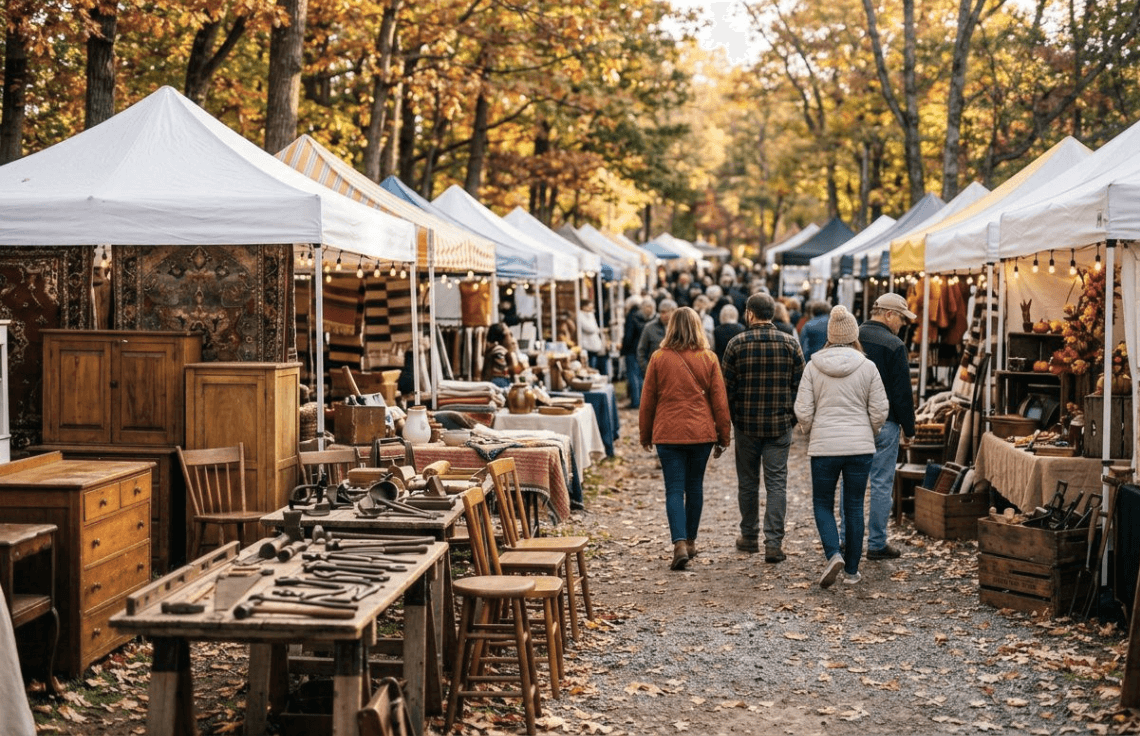
Spring: the great clear-out
Spring is when outdoor markets reopen and when households empty their attics. Vendors who have spent the winter buying at estate sales and auctions bring stock they've been holding. Selection across almost every category peaks, and so does competition: everyone else also knows the good stuff appears in spring.
It's the best season for furniture, household goods, and general browsing, and the worst season for bargains, because vendors have not yet grown tired of carrying their stock.
Summer: volume and heat
Peak attendance, peak vendor count, peak crowds. Garden equipment, outdoor furniture, sporting goods, and children's items dominate as families cycle through the things their children have outgrown. Fragile and heat-sensitive goods stay home: records warp in a hot van, candles and vinyl don't enjoy a July field.
Summer is the season to buy anything for outdoors, and to shop the first two hours of the day. Afternoon heat empties aisles, which is bad for browsing and excellent for negotiating.
Fall: the practical season
As the season winds down, two things happen at once. Households prepare for winter, so tools, heaters, winter clothing, and workshop equipment appear. And vendors begin to think about the fact that everything unsold has to be stored somewhere until spring.
The last outdoor markets of the year are, reliably, the best day of the year to negotiate. A vendor facing a winter of storage costs will take an offer in October that they'd have laughed at in May, on the identical item. If you want furniture, this is when to buy it.
Winter: indoors, and thinner
Most outdoor markets close. The ones that continue move indoors, and the vendor roster shrinks to the people with permanent booths. Stock skews sharply toward antiques, collectibles, records, books, and glass, because those are the things worth keeping a year-round booth for.
Crowds are thin, which means unhurried browsing and vendors with time to talk. For anyone learning a category, a January indoor market with a knowledgeable dealer who has nothing else to do is an education you cannot buy in July. Our state-by-state count of indoor markets is the place to start.
The calendar that overrides all of this
A single large regional market can rearrange the season entirely for the region around it. Vendors save their best stock for the biggest event they attend, and buyers travel for it. If there's a well-known market within driving distance of you, the weekend it runs is worth more than any generalization about seasons in this article.
Markets that run only on particular weekends of the month are common, and easy to drive an hour toward on the wrong Saturday. Check the posted hours on the listing before you go.